How do I read a compartmentation survey report?
- Every seal labelled and photographed
- BM TRADA / FIRAS-certificated contractors
- Written price before any work
Start with the item list. Each line is one breach in a fire wall or floor, and it should give you a reference, a location, a size, what passes through, and the seal it needs.
Here is a made-up line in the format most reports use:
C-047 | Level 2 | Riser R1, north wall | 300 x 120mm | steel tray, 25 cables, 1 no. 28mm copper | Batt both faces, mastic | Photo 047.
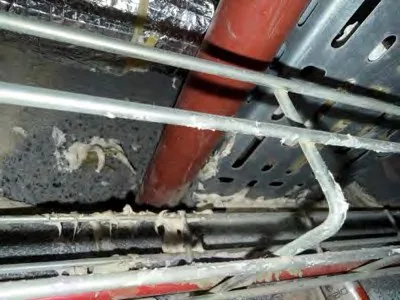
Check the location
Can you find C-047 from the description? A good report has marked-up plans. If it only says "riser cupboard", and there are four, ask which.
Check the size
The size drives the seal. A 300 x 120mm opening is batt territory. A 20mm gap round a single cable is mastic.
Check the service
Plastic or metal? Lagged or bare? The seal for a plastic pipe is different from a copper one. If the report says "pipe" and nothing more, the price can only be rough.
Check the suggested seal
It should name a type of seal. "Fire stop" on its own is too vague. Collar, wrap, batt, mastic, linear seal.
Look for totals
A summary such as 84 items: 31 mastic, 22 batt, 17 collars, 9 wraps, 5 linear. That tells you the scale before you read every line.
What the report should not do
It should not tell you how urgent each item is. That is for the fire risk assessor.
Turning it into a job
Send the report to two or three firms. Ask each to price per item. Compare like for like.
Give us the postcode, the use of the building and the number of floors. A survey page or a few photos of the gaps lets us price it faster.